Salus Remote Surveys

Salus marine surveys conduct surveys for our clients world wide. This week we are in Hong Kong conducting a pre purchase survey on a Superyacht for an Australian client.

Our survey will focus on structural integrity and condition of the yacht, while creating an inventory of all equipment onboard.

Due to the difficulty and expense of hauling the yacht out in Hong Kong this survey will include an underwater dive inspection of the hull. Richard Hewson is a certified ADAS commercial diver and will survey the hull personally.

Whilst an underwater survey does not allow for NDT testing such as TIR and hull moisture content readings, that we would normally conduct out of the water, we are still able to make a reasonable assessment of the hull condition and locate any damage, or deformities.

This survey will also include a complete rig inspection and sea trial. Because the yacht has not been sailed for a long time the mast will be inspected by drone, prior to a visual inspection.

We look forward to conducting a thorough inspection from stem to stern, keel bast to masthead and all the small components in between. A concise report will be delivered to our client and we trust it will aid in his decision and negotiations.

SALUS recognised as AIMS Commercial Marine Surveyor

Salus Maritime is excited to be recognised by the Australian Institute of Marine Surveyors as a Certified Marine Survey Organisation. Salus is the ninth Australian surveying company to be awarded the certification by AIMS recognising our ISO 9001 management system and excellent surveying practices.

AIMS Certified Commercial Marine Surveyors™ are Individual Members or Organisations who have elected to become Certified. Certification is a quality system where surveyors and surveying organisations undertake yearly auditing and verification of their professional experience and qualifications, insurance coverage and business management systems and practices. Of particular interest to AIMS is our Certified Members internal processes which show a commitment to upholding marine survey standards within the industry and within their business and employees. Those who choose to partake are awarded with Certification, an accreditation respected and recognised within the marine survey industry.

Individual Certified Surveyors can be located within the Search function of the AIMS website. When you search for a surveyor their level of membership will be displayed, you are looking for Certified Commercial Marine Surveyors. https://www.aimsurveyors.com.au/Certified-Commercial-Surveyors

SALUS Maritime – Expert Marine Surveying & Vessel Management
Based in Hobart, Tasmania, SALUS Maritime provides comprehensive marine surveying, vessel inspections, and management services for both recreational and commercial vessels across Australia and internationally. With expertise spanning all aspects of vessel operations, we specialize in delivering high-quality, accredited surveys and consultancy services tailored to the unique needs of our clients.

Our Expertise
Founded in 2016 by Richard Hewson, SALUS Maritime is built on decades of hands-on maritime experience. Richard has worked in the marine industry since 1998, progressing from AYF Yacht Master to Master Unlimited and Marine Engine Driver Grade 2. Holding an Advanced Diploma of Marine Surveying, Richard brings extensive knowledge from a diverse career spanning:
• Marine surveying of commercial and recreational vessels
• Offshore oil and gas operations
• Superyacht management
• Wind farm maritime support
• Royal Australian Navy (RAN) contracts
• Antarctic resupply missions
• Aquaculture and commercial fishing sectors

A seasoned offshore skipper, Richard notably led his team to victory in the 2012 Clipper Round the World Yacht Race. His leadership and technical expertise, combined with a deep passion for boats, drive SALUS Maritime’s commitment to maximizing vessel performance, efficiency, and safety. At SALUS Maritime, we go beyond inspections – we ensure your vessel operates at its full potential while maintaining the highest safety standards.

What is the difference between a Pre Purchase and an Insurance Survey?

Pre-purchase and insurance surveys are required when a potential buyer of a vessel or an insurer requests a survey to ascertain the actual condition of a vessel, assess the possible risks associated with insuring the vessel or to establish its true value.

Pre-purchase and insurance surveys are not one and the same and this is usually reflected in the additional time and cost associated with a pre-purchase survey. Each survey forms an important purpose, but it is important for a consumer to understand the difference between the two and their requirements prior to proceeding with engaging a surveyor.

The Australian Institute of Marine Surveyors provides some fantastic information for surveyors, boat owners and buyers and the following information, terms of engagement and a range of other information can be downloaded from their website https://aimsurveyors.com.au/Pre-Purchase-Vs-Insurance-Vessel-Surveys

Australasian Institute of Marine Surveyors – Pre-Purchase Vs Insurance Vessel Surveys
Recreational Vessel Surveys Factsheet Pre-purchase versus Insurance Surveys. Pre-purchase and insurance surveys are required when a potential buyer of a vessel or an insurer requests a survey to ascertain the actual condition of a vessel, assess the possible risks associated with insuring the vessel or to establish its true value.
aimsurveyors.com.au
PRE-PURCHASE VESSEL SURVEYS INSURANCE VESSEL SURVEYS
Pre-purchase surveys are generally full condition surveys of the vessel.
Will generally include a comprehensive out of water hull inspection as well as a sea trial.
Involves inspection of as many aspects of the vessel as possible without taking it apart including structural integrity, safety of systems and equipment and cosmetic details.
Usually includes testing of all major machinery and operational systems.
Includes a comprehensive written report with supporting photos.
Insurance surveys are purposed to assess the insurers risk in insuring the vessel
Requirement and reporting formats will vary enormously between different insurers.
Generally cover vessel features, condition, safety equipment and valuation but tends to be quite cursory in comparison to a pre-purchase condition survey.
Smaller vessel insurance surveys may be via a checklist style report with only a summary and few photos.
Less expensive survey than a comprehensive pre-purchase survey.

There is no industry standard as to what exactly will be included in each survey type, it will depend on several factors:

  • The price the client is willing to pay for the survey.
    Some systems or equipment on the vessel may be inaccessible or unable to be accessed within the agreed time or cost of the survey. This should be clarified before the survey commences so the client knows exactly what to expect.
  • The requirements of the insurance company.
    The insurance company may have standard reporting formats or special requests that surveyors must take into account as part of an insurance survey.
  • Does specialist equipment need to be inspected?
    You may request specialist equipment on board such as mechanical or rigging and sails to be included as part of the survey. Due to the specialist nature of these components, there may be additional costs, or you may need to engage a specialist separately to your marine surveyor to assist.
  • Is specialist Non Destructive Testing equipment required?
    If you are surveying a metal boat, ultrasonic testing may be required. If you are surveying a fiberglass or composite boat moisture meter checks and thermal imaging should be used to determine if the hull is delaminating and to identify any repairs.
  • Is the survey being performed in or out of the water?
    To allow a full inspection of the hull, the survey will need to be conducted out of the water, but in water testing may be required of some operational machinery. For a comprehensive pre-purchase survey a sea trial is recommended to allow equipment and major systems to be tested.

Having a written agreement in place before the survey commences is critical for both parties to understand the purpose and type of the survey, the type of report to be expected and what is and isn’t included as part of the survey cost.
A detailed survey takes time. A two hour insurance survey may be adequate if the vessel has been inspected by the same surveyor five years previous, but will a 2 hour inspection be adequate for a pre purchase survey? Unlikely. In most cases a pre purchase survey can take more than one day. It is vital the client understands the surveyor’s scope for the type of survey being performed so they can request and negotiate a price for additional inclusions if required.
As a rule of thumb, a pre-purchase survey will generally be more than sufficient to cover the requirements of an insurance survey, but an insurance survey will not be sufficient to cover the requirements of a pre-purchase survey.
If you require a Terms of Engagement agreement document prior to undertaking a survey or engaging a surveyor, the Australasian Institute of Marine Surveyors and Salus Maritime have a standard document that can be used to form an agreement between both parties.

Update your Safety Management System

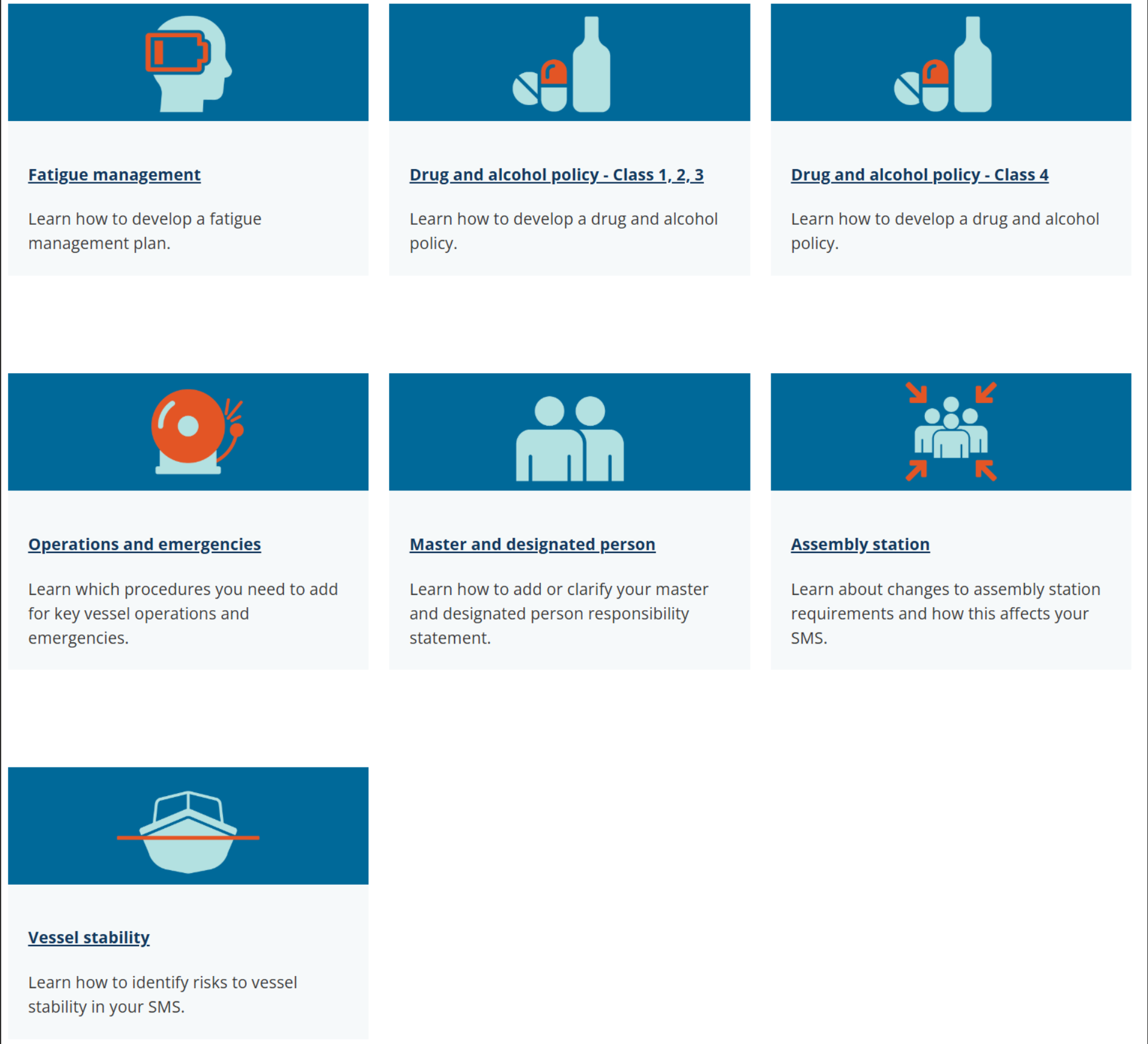
AMSA have announced changes to Marine Orders 504 come into effect on 1 June 2025. This means that if you are a Domestic Commercial Vessel operator you will need to modify your Safety Management System (SMS).

Modifications and amendments include

  • Fatigue Mangement
  • Drug and Alcohol policy
  • Operations and emergencies
  • Master and designated person
  • Assembly stations
  • Vessel Stability

Is your safety management system up to date? Salus can help modify your SMS. For more information please contact us or take a look at https://www.amsa.gov.au/changes-safety-management-system-requirements-1-june-2025.

Electronic Visual Distress Signals V’s Pyrotechnic Flares

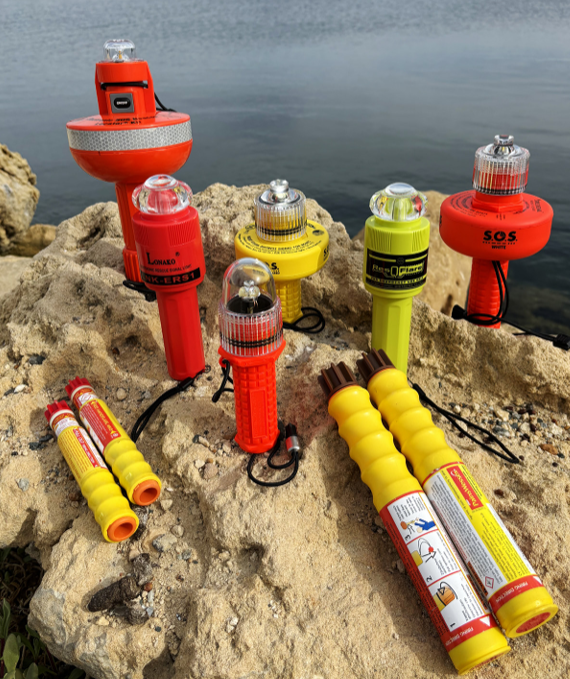
Electronic Visual Distress Signals (EVDS) are an electronic substitute for traditional pyrotechnic flares and a brilliant advance in marine safety. We are often asked how legal and effective they are and if they can be used instead of the traditional pyrotechnic flares.

Pros

  • EVDS do not pose an explosive risk to your vessel
  • EVDS will cot burn or injure the user
  • Traditional flares fire to 300m and last 40 seconds so should only be used when there is a good possibility they will be seen by another vessel.
  • EVDS last 6 – 20 hours depending on the brand and the function, therefore they can be left on for a long time, increasing the chance they may be seen.
  • EVDS work by throwing out a vertical fan of red or green light that, when aimed at a target, will flash as the light passes from side to side of the target. The devices can shoot a signal light to an object up to about 30 kilometres away in clear conditions.
  • Some EVDS flash a signal such as S.O.S which can not be confused if seen by a passing vessel.
  • EVDS provide a long-lasting, reusable option for signalling. Once activated, they operate for at least six hours and can last even longer if you carry spare batteries in your safety kit.
  • EVDS do not expire like pyrotechnics, simply replace the batteries annually.
  • Far safer to have onboard, and safer to use.
  • They are small enough to attach to lifejackets, onto a kayak or dinghy or even carried on a SUP and typically have enough power in the batteries to last for about five hours.

Cons

  • As lights of this characteristic are not internationally approved distress signals there is a realistic chance that they may not be recognised as such and could therefore fail to effect an appropriate response in the event of a distress situation.
  • There are also issues with some of these devices around the dispersion (directional beams) characteristics, range of the lights, and also the ability to differentiate the lights from a lit background (e.g. street lighting).
  • There are issues still under experimentation to determining the best ergonomic qualities/capabilities.
  • All of these issues require substantial testing prior to approval.
  • For these devices to be effective distress signals they must be internationally recognised, which would require a change to Annex IV of the COLREGS.

Recreational vessels in most states can replace orange smoke and red hand flares provided a VHF radio and an EPIRB is board. For coastal waters, recreational vessels are still required to carry two parachute rocket flares in addition to your EVDS.

At this point to time carriage of pyrotechnic flares remains mandatory for AMSA Domestic Commercial Vessels and RAV’s. AMSA advises that no EVDS equipment currently available meets the light intensity requirements by the IMO Life Saving Appliance Code or AS 2092-2004, and Australian Standard AS 2092-2004. Therefore, they cannot be carried in substitute of pyrotechnic flares on vessels where mandatory carriage applies.

SOLAS

The SOLAS Convention prescribes the standards that distress equipment must meet and although it is not mandatory for small craft to comply with the Convention, adoption of similar Australian standards is consistent with the intent to align standards internationally. A variance from this practice in the eventual development of the respective Australian Standard may cause confusion in a distress situation. We are aware that the United States Coast Guard (USCG) has commissioned a research project titled Alternatives to Pyrotechnic Distress Signals on the development of standards for EVDS with the Radio Technical Commission for Maritime Services (RTCM). This research is investigating the effectiveness of EVDS with a view to supporting the development of international standards should these devices prove fit for use as a distress signalling means. This would result in subsequent international approval and inclusion in Annex IV of the COLREGS.

The USCG Project are also reviewing and analysing laboratory testing results to help identify what might be colour and patterns that provide the greatest conspicuousness. They are hoping to conduct field-testing to either confirm or improve-on the laboratory results in the July-August time frame. As well as the actual signal characteristic, USCG are also looking at the ergonomic qualities/ capabilities of whatever the device will look like. AMSA supports these two initiatives and keenly awaits its recommendations.

Our Recommendations

EVDS are a valuable asset to your safety kit. Replacing pyrotechnics with EVDS depends on how you use your boat and the regulations. If you have a recreational boat operating inshore waters then complete replacement is legal, safe, and recommended. If you have a recreational vessel operating coastally or offshore or if you have a commercial vessel then EVDS are a great asset, but we recommend you also carry your full Coastal or offshore Pyrotechnics.

From my maritime experience, I believe that EVDS are far safer, and more likely to be seen than Pyrotechnic flares. So, Next time you are ready to replace your inshore flares, or if you are preparing for an offshore passage, consider the EVDS option and the associated requirements. Remember it is illegal to carry out of date flares and you should always dispose of out-of-date flares correctly.

Initial Survey Carbon Fiber High Speed Foiling Vessels.

If your company is planning to build a new Domestic Commercial Vessel (DCV) or looking to future builds of high speed or foiling vessels contact Salus Maritime.

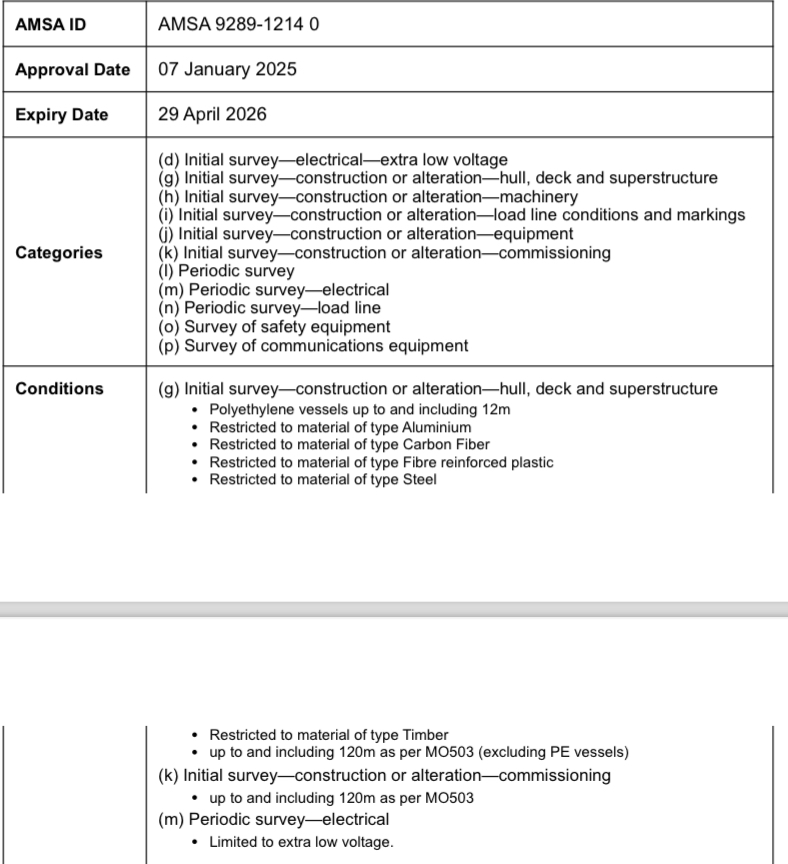
Richard Hewson has extended his initial survey categories to include Polyurethane (HDPE), Aluminium, FRP, Steel and Carbon Fiber

Carbon Fibre is the material of the future, particularly when building high speed and foiling vessels. We now offer one of the only certified Carbon Fibre surveys in Australia.

Our surveyors are experienced new build surveyors and project managers, so if you have plans to build in the future contact Salus Maritime.

First Aid Survey

Recently, I renewed my senior first aid training—a vital refresher that ensures I can handle emergencies confidently. But it also reminded me of an important lesson: first aid stabilizes a patient, while doctors diagnose, treat, and prevent complications.

Imagine this scenario:

You’re walking down the dock and find someone unconscious. Thanks to my training, I can quickly follow the DRABCD protocol—checking for Danger, Response, Airway, Breathing, Circulation, and applying Defibrillation if necessary—before calling 000 for paramedics.

Once the paramedics arrive, they stabilize the patient and transport them to a hospital, where specialists perform X-rays, blood tests, scans, and a diagnostic workup to uncover underlying issues and prevent further harm.

Now, Think About Your Boat

Inspecting a yacht without a qualified surveyor is like relying on first aid alone—it’s reactive and surface-level. While experienced boaters may spot visible issues, a professional marine surveyor, like Richard Hewson from SALUS Maritime, acts as the specialist doctor for your vessel, equipped with diagnostic tools and expert insight to uncover hidden problems.

A good surveyor doesn’t just “check the vitals.” A good surveyor will:

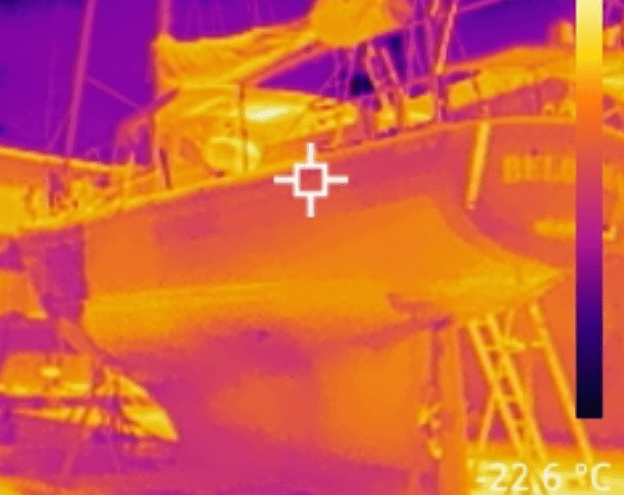
Use Advanced Tools: Infrared thermography, moisture meters, and ultrasound thickness gauges to detect hidden faults.

Analyze Systems Deeply: Electrical systems, plumbing, rigging, hull integrity, and structural soundness.

Spot Potential Problems Early: Avoid costly repairs by catching issues before they escalate into mechanical or structural failures.

– Advise the buyer: Is this really the right boat for you? How much time and money will it cost in years to come?
Prevention Is Better Than Cure

In medicine, we know prevention is better than cure. The same applies to yachts – no one wants unexpected surgery, and boat owner wants to deal with sudden breakdowns at sea or costly repairs in the shipyard.

Investing in a pre-purchase inspection or routine survey with a trusted professional saves you from:

• Expensive Surgeries: Major repairs or replacements that could have been avoided with early intervention.

• Breakdowns at Sea: Safety hazards and mechanical failures that compromise lives and property.

• Depreciating Value: Poor maintenance can severely impact resale value and insurance claims.

Why Work with a Professional Surveyors such as SALUS Maritime?

With years of experience in yacht surveys, Richard Hewson from Salus Maritime brings the expertise, tools, and industry knowledge necessary to protect your investment. Whether you’re buying a new yacht, refitting an older vessel, or planning a major voyage, his inspections provide peace of mind and practical recommendations for long-term performance.

The Bottom Line

Owning a yacht is a serious commitment—much like managing your health. While basic checks and self-assessments are helpful, trusting a qualified surveyor is the smartest decision to avoid risks and ensure smooth sailing.

Because in both health and yachting, prevention is always better than cure.
Ngataki at Australian Wooden Boat Festival

We are very excited that the yacht Ngataki is entered in the Australian Wooden Boat festival in Hobart 7-10 February Hobart Tasmania https://awbf2025.org.au/featured-vessels/

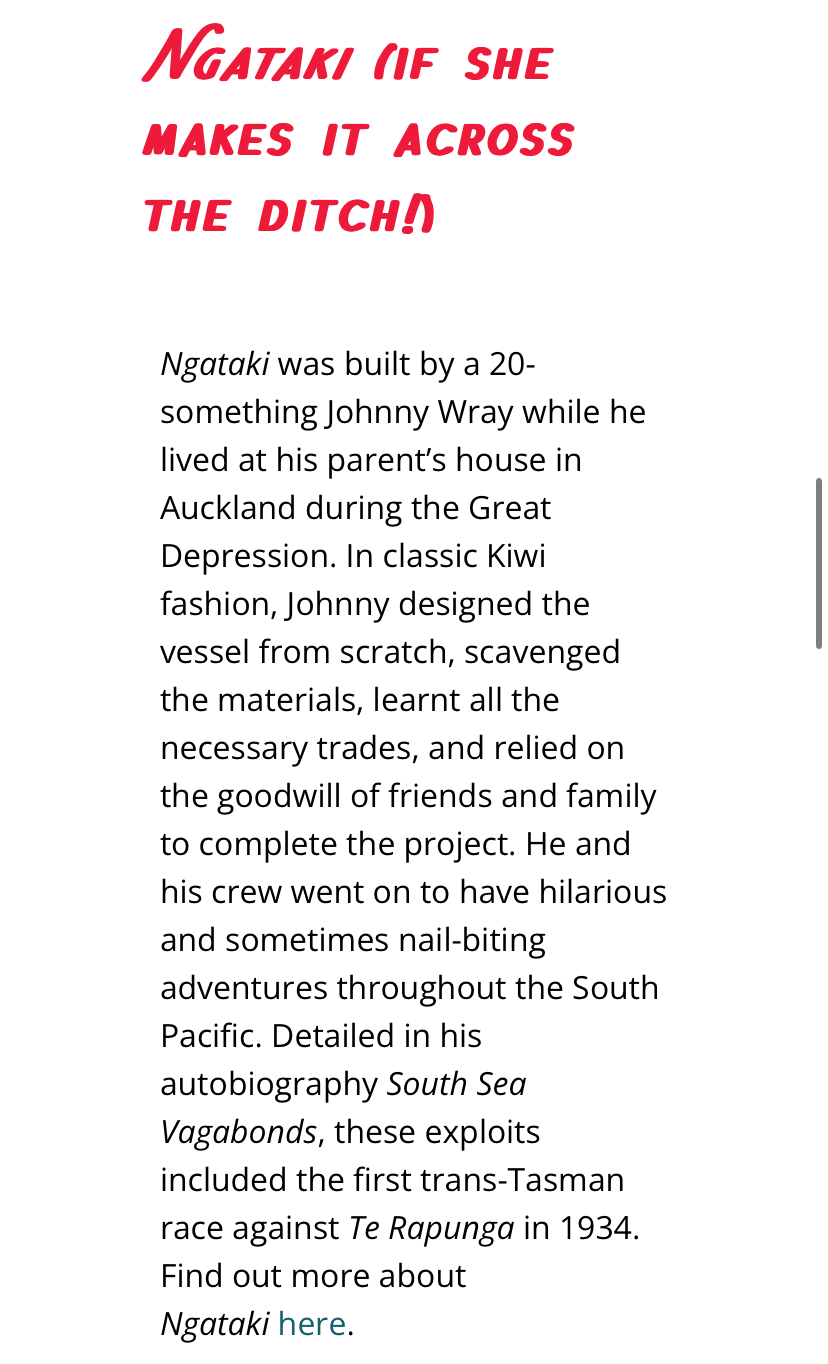
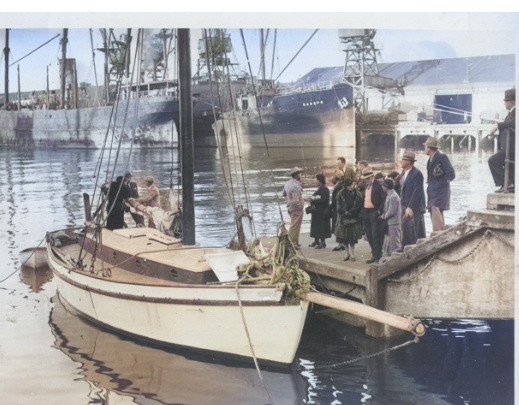
Ngataki is the famous yacht built by Johnny Wray with no money then sailed the Pacific. The first island Wray and crew came in the Pacific to they called “Sunday Island”.

Wray wrote an awesome book about their adventures called South Sea Vagabonds. https://tinorawatrust.co.nz/ngataki

SALUS Maritime and SeaJet Paints

Salus Maritime has established a partnership with Seajet paints to become an authorized distributor and retailer.

Seajet products represent the latest technologies to improve the performance and appearance of your boat.

While working overseas we used SeaJet paints on all our vessels and found its performance was superior to other Antifouling. SeaJet 34 is the coating of choice on our yacht “Sunday Island” and has performed for over three years and 28,000nm.

On our return to Australia we could not buy Seajet antifouling to replace the Seajet 34 on our Koopmans 45 Aluminium yacht and Aluminium work boat. Alternative Antifouling products offered by other companies did not meet our expectations. Some Antifouling that promoted use on Aluminium vessels even contained copper!

We contacted SeaJet to become a distributor and now supply SeaJet products to all our customers.https://www.seajetpaint.com/en

Don’t get frustrated with the quality of your underwater paint system and Antifouling, switch to Seajet and be rewarded with a clean bottom for years to come.

Pre Season Keel and Rudder Inspection

Is it just me or has there been an extraordinary number of keel and rudder failures and sinking boats reported over the past 12 months as a result of rudder failure?

Keel and rudder failure may be avoidable with some simple checks. The importance of this should not be under appreciated as your keel keeps your yacht upright and your rudder turns the boat where you want to go!

Rudder fin failure at best will mean the retirement from a race or end of your cruising season. At worst it could result in your boat sinking very quickly or running aground out of control, and then sinking quickly.

Keel failure will most likely have catastrophic results resulting in fatalities at sea and or complete loss of the boat. Analysis of incident reports shows that some of the factors contributing to keel failure are inadequate maintenance, or damage after a grounding or other underwater impact. https://www.yacht.de/en/special/distress-at-sea/accident-one-sailor-dead-after-keel-breakage-two-rescued/

In response to these incidents, Australian Sailing has recently amended the Special Regulations for Category 1, 2 and 3 racing by introducing a requirement for keel and rudder inspections to be conducted periodically. The requirement is consistent with what is happening internationally.

Whilst now being regulated for Cat 1-3 racing yachts, checking keels and rudder fins is best practice that few boat owners factor into their annual maintenance plans.

Australian Sailing issued a Safety Information Notice Surveys and Keel Inspections 2015-3 in response to the Cheeki Rafiki incident (4 dead). Another, SIN 2020-03 Keel and Rudder Inspections is issued in conjunction with this Amendment and answers frequently asked questions about the new Special Regulation.

If you’re racing or planning blue water cruising, recently run aground or noticed cracks or damage to your keel or rudderit would be prudent to get your appendages checked. Call us at Salus Maritime to organise an inspection.

Both Safety Information Notices can be read at https://www.sailingresources.org.au/safety/safety-notices/.
The keel and rudder inspection form can be found here https://www.sailingresources.org.au/safety/equipment-auditing/
The Special Regulations and Amendments can be read at https://www.sailingresources.org.au/safety/specialregs/

Cheeky Rafiki https://www.morganscloud.com/2014/06/05/cheeki-rafiki-tragedy-time-for-changes/ https://en.m.wikipedia.org/wiki/Cheeki_Rafiki